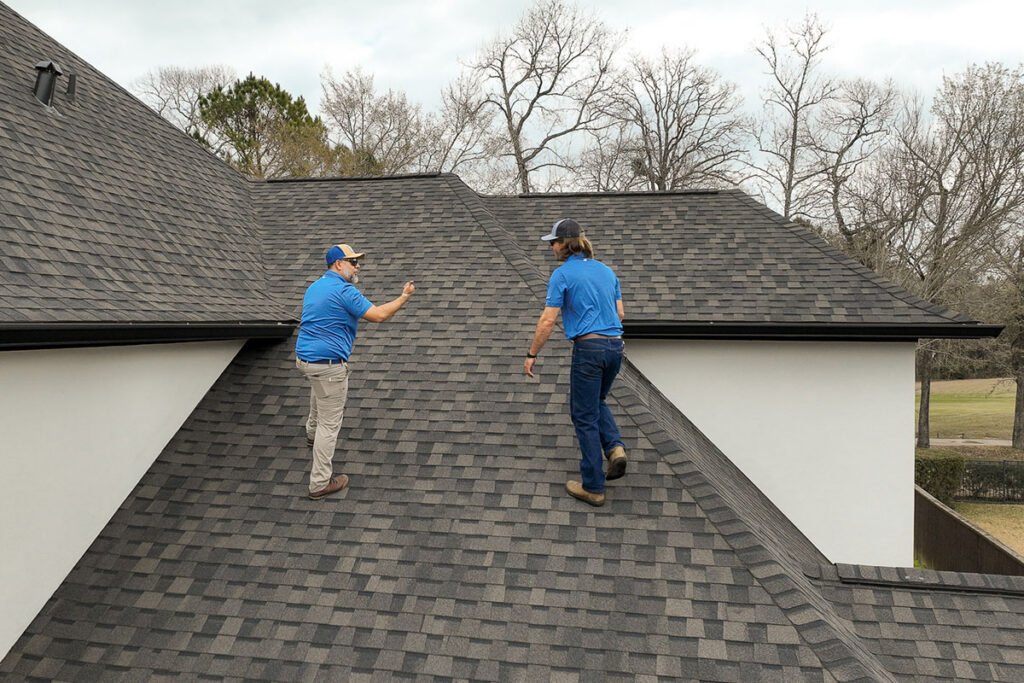
Most homeowners aren’t looking for a list, they’re trying to understand where they stand. Whether the inspection follows a storm, a real estate transaction, or just time passing, the goal is to replace uncertainty with something more concrete. We walk the roof, note what’s holding, what’s starting to shift, and where problems tend to develop next based on what we’re seeing now.
That process typically includes:
Observing overall condition and how materials are wearing in place
Checking areas where water concentrates or changes direction
Reviewing flashing, penetrations, and transitions for early separation
Noting signs of movement that may not be visible from the ground
Providing clear, usable context for what matters now and what can wait
Committed to Excellence
Trusted & Certified
Texas Engineered Roofing aligns with respected organizations that mirror our dedication to craftsmanship, industry expertise, and the communities we serve.
How We Evaluate
What Changes Over Time
Roofs in this area don’t usually fail all at once. What happens instead is a slow shift, fasteners working loose after repeated heat cycles, sealants drying earlier than expected, water starting to track differently after a storm. None of these on their own mean failure, but together they tell you where the roof is headed. An inspection connects those dots so you’re not reacting to a single issue, but understanding the direction the system is moving.
Next Steps
Decisions Without Pressure
An inspection should give you room to think, not push you toward a decision. Once you understand how the roof is performing and where it’s likely to change next, the path forward becomes clearer. Sometimes that means leaving things alone, sometimes it means planning ahead, and sometimes it means addressing a specific area before it turns into something larger. The value is knowing the difference.